

Ramp-Up Access and Why It Matters for Logistics
In a multi-storey food factory, how goods reach the unit shapes every delivery. Full ramp-up access changes the economics versus cargo-lift buildings.
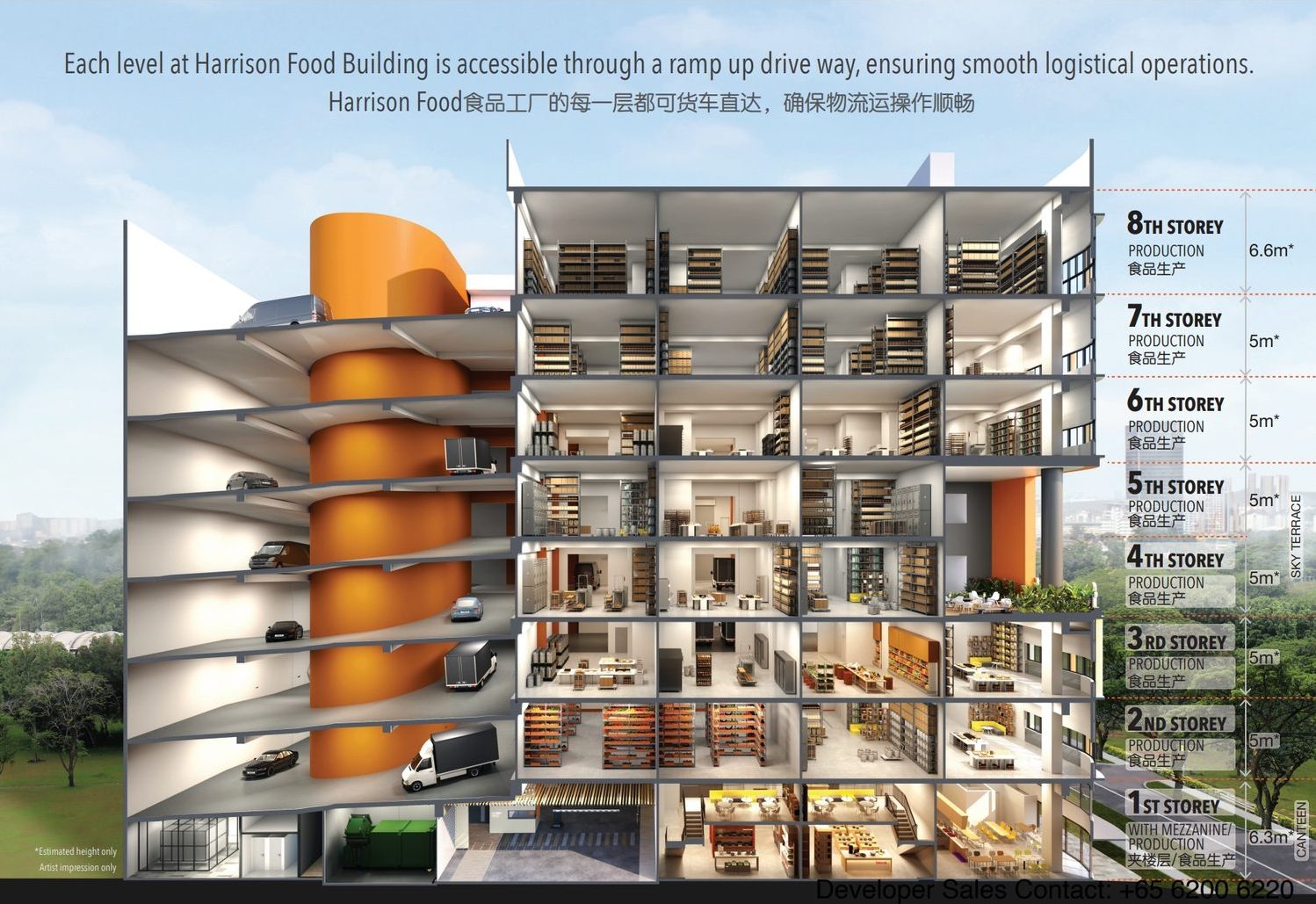
In a stacked, multi-storey food factory, vertical circulation is the hidden bottleneck. Whether goods move by cargo lift or drive straight to the unit affects delivery times, vehicle queuing and ultimately operating cost.
The cargo-lift bottleneck
Older multi-user buildings rely on cargo lifts shared across many tenants. At peak hours that means queuing, split loads and slower turnaround — a real constraint for time-sensitive food deliveries and cold-chain windows.
What full ramp-up changes
A continuous vehicular ramp lets lorries drive directly to any floor, so loading happens at the unit door without waiting on a lift. Wide driveways and separate ingress/egress keep traffic flowing even when several units receive deliveries at once.
How it works here
At Harrison Food Building, a full ramp connects Level 1 to Level 8 with dedicated loading bays on the ground floor. See the sectional elevation on the site plan, then check current availability on the balance units chart.